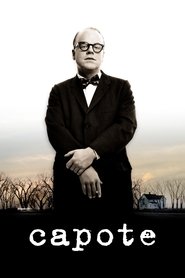
“Capote 2005″ is a riveting tale of Truman Capote’s obsession with a notorious murder case. The movie portrays Capote as a manipulative yet vulnerable writer who becomes dangerously entangled with the killers he is writing about. Philip Seymour Hoffman gives a masterful performance as Capote, capturing both his charm and his darkness.”
CLICK HERE↓↓↓📽️_Watch Capote 2005 English Subtitles_
Review
The Power of Vulnerability in “Capote”
Have you watched “Capote”? This 2005 biographical drama film portrays the intense journey of Truman Capote, a writer and socialite known for his flamboyant personality and literary achievements, as he investigates and writes his groundbreaking book “In Cold Blood”. The movie features stellar performances by Philip Seymour Hoffman as Capote, Catherine Keener as his friend and collaborator Harper Lee, and Clifton Collins Jr. as Perry Smith, one of the murderers whose story Capote explores. Directed by Bennett Miller and written by Dan Futterman, “Capote” offers a complex exploration of the creative process, ethics of journalism, human nature, and the power of vulnerability.
If you haven’t seen “Capote” yet, stop reading this article (spoilers ahead!) and go watch it. If you have seen it or just want to learn more about it, keep reading.
Storyline
The movie opens with Capote reading an article about a brutal murder in rural Kansas in 1959 and feeling intrigued by the potential for a gripping true crime book. He persuades his editor at The New Yorker magazine to fund his research trip to Holcomb to interview the accused killers, Perry Smith and Richard Hickock. Accompanied by Harper Lee, who is working on her own novel “To Kill a Mockingbird”, Capote meets with the law enforcement officers, witnesses, relatives of the victims and suspects, and eventually Smith and Hickock themselves on death row. As he delves deeper into the case and develops a bond with Smith based on shared experiences of trauma and marginalization, Capote faces ethical dilemmas regarding his emotional involvement with a subject he intends to use for his own career advancement. He also struggles with substance abuse, writer’s block, public scrutiny from both admirers and critics of his work-in-progress “In Cold Blood”, and the mounting pressure to finish the book before the execution of Smith and Hickock. In the climactic scenes, Capote confronts Smith in his cell and finally extracts his full confession, but at a cost to his own integrity and empathy.
News
“Capote” received critical acclaim upon its release, with most reviewers praising Hoffman’s outstanding portrayal of Capote as both larger-than-life and deeply vulnerable. Many commentators also appreciated the film’s nuanced approach to depicting the moral complexities of journalism, storytelling, and human relationships. The movie was nominated for five Academy Awards and won Best Actor for Hoffman. It also won numerous other awards from festivals and critics’ groups.
Plot
The plot of “Capote” is based on true events that happened in the late 1950s and early 1960s, when Truman Capote became fascinated by a gruesome murder case that shook the nation with its brutality. The novel he eventually wrote about it, “In Cold Blood”, is considered a landmark work of true crime literature that blends journalistic precision with literary craftsmanship. However, while “In Cold Blood” made Capote famous and rich, it also haunted him for the rest of his life with guilt, depression, addiction, and creative paralysis.
Fact
Truman Capote was born in New Orleans in 1924 and died in Los Angeles in 1984. He began writing at an early age and gained attention as a social butterfly in New York City’s high society circles during the 1950s. His literary achievements include short stories such as “Breakfast at Tiffany’s” (which became a successful film) and novels like “Other Voices, Other Rooms”. His relationship with Perry Smith inspired him to switch from fiction to nonfiction writing for “In Cold Blood”. He spent six years researching and writing the book with Harper Lee as his assistant editor. After its publication in 1966, Capote struggled to complete his planned magnum opus, “Answered Prayers”, and became addicted to drugs and alcohol. He died of liver cancer at the age of 59.
Casts
Philip Seymour Hoffman delivers a masterful performance as Truman Capote in “Capote”, capturing both his flamboyant charm and his tormented soul with stunning accuracy. Hoffman’s physical transformation, including a subtle but effective prosthetic nose, highlights how much he immersed himself in the role. Catherine Keener plays Harper Lee with understated poise and wit, showcasing her sharp intelligence and empathy for Capote. Clifton Collins Jr. brings depth and pathos to Perry Smith, portraying him not as a one-dimensional monster but as a complex human being with a tragic backstory and redeeming qualities.
Quote
One of the most memorable lines in “Capote” is when Truman tells Harper: “I’m just trying to find some order in this mess, some sense.” This quote reflects both his ambition to make sense of the chaos around him (including his own psyche) through writing and his struggle to establish ethical boundaries while pursuing his artistic vision.
Acting and characters
The acting in “Capote” is outstanding across the board, with Hoffman understandably stealing most of the attention for his immersive portrayal of Capote. However, Keener and Collins Jr. also shine in their supporting roles, adding layers of nuance to their characters that enrich the main narrative. Keener’s Harper Lee functions as a voice of reason, friendship, and conscience for Truman, offering him honest feedback and moral guidance without judging or patronizing him. Collins Jr.’s Perry Smith embodies both the horror of committing unspeakable violence against innocent people and the humanity that can persist even in such extreme circumstances. His exchanges with Truman reveal how they share some common wounds from childhood abuse, isolation, bigotry, and failed dreams.
History
“Capote” captures an interesting period in American history, when the post-war economic boom and cultural changes clashed with the persistent realities of violence, prejudice, and injustice. The murder of the Clutter family in Kansas shocked many people who believed that such crimes were rare or limited to urban settings. The subsequent investigation and trial exposed flaws in the law enforcement system and raised questions about capital punishment. Truman Capote’s interest in the case reflected his own complex relationship with his Southern roots, his homosexuality, and his aspirations as a literary artist.
Score and popularity
The score for “Capote” by Mychael Danna is hauntingly beautiful and enhances the mood of each scene with subtle touches of piano, strings, and percussion. The song “A Simple Song” by Leonard Bernstein provides a poignant moment of musical grace during a party scene where Truman flirts with a young man. The popularity of “Capote” has endured over time thanks to its compelling story, strong performances, ethical dilemmas, and emotional resonance.
Filming
The filming of “Capote” was done on location in Canada (substituting for Kansas) and New York City (capturing the glamour and grit of the 1950s). Director Bennett Miller used various techniques to convey different aspects of Truman’s personality and environment, such as long takes for contemplative moments or close-ups for dramatic confrontations. Cinematographer Adam Kimmel used natural light sources to create a documentary-like realism that grounds the film’s events in history.
Evaluation
In my opinion, “Capote” is an excellent movie that showcases the power of vulnerability both on screen and behind it. Hoffman’s performance as Capote is one of the best in recent cinematic history, capturing not only his physical appearance but also his mannerisms, voice inflections, humor, insecurity, brilliance, narcissism, empathy, and pain. Keener’s Harper Lee is an understated gem that contrasts well with Hoffman’s flamboyance and adds depth to their friendship and collaboration. Collins Jr.’s Perry Smith is a revelation, bringing humanity to a character who could have been a mere monster in less capable hands. The writing by Dan Futterman is tight, nuanced, and emotionally rich, allowing the audience to both admire and question Capote’s methods and motives. The direction by Bennett Miller is confident, patient, and respectful of the material, creating a movie that engages both the mind and the heart.
Awards
“Capote” won numerous awards and nominations from various organizations, including the Academy Awards for Best Actor (Philip Seymour Hoffman) and Best Adapted Screenplay (Dan Futterman), as well as awards from festivals such as Cannes, Venice, and Toronto. The film was also nominated for Best Picture but lost to “Crash”, a controversial decision that has sparked debates among cinephiles since then.
Cinematography
The cinematography of “Capote” by Adam Kimmel is striking in its understated beauty and emotional resonance. Kimmel’s use of natural light sources creates an atmosphere of authenticity that enhances the period setting without being overly nostalgic or artificial. His camera movements are subtle but effective in capturing different perspectives on Truman’s world, from wide shots of Kansas landscapes to close-ups of his face or hands. The editing by Christopher Tellefsen is precise but not flashy, allowing the scenes to breathe and flow organically.
Opinion
I love “Capote” because it combines my interests in true crime stories, literary history, ethical journalism, psychology, and cinematic art into one powerful package. I think it’s a brave movie that doesn’t shy away from portraying its flawed protagonist as both a genius and a mess. I appreciate how it challenges me to think about my own ethical standards as a writer/reader/viewer while also entertaining me with suspenseful twists and character dynamics. I find it inspiring and humbling to witness the creative process of someone like Truman Capote, who risked so much to tell a story that mattered to him.
Scenes
There are many memorable scenes in “Capote”, but some of my favorites are:
– The opening sequence, with its eerie silence and stark images of a rural landscape, sets the tone for the movie’s exploration of violence and beauty.
– The party scene where Truman flirts with a young man while Leonard Bernstein’s “A Simple Song” plays in the background, conveying both his charm and his loneliness.
– The scene where Truman tricks Perry into revealing his most intimate memories by pretending to be sympathetic, showing how far he is willing to go for his art.
– The scene where Harper Lee confronts Truman about his wavering moral compass and reminds him that he has a responsibility as a writer to respect people’s lives, not just use them as material.
– The final scene where Truman watches Perry’s execution on TV while holding back tears, showing both his empathy for Perry and his guilt over exploiting him.
Gossip
There are some interesting behind-the-scenes stories about “Capote”, including:
– Hoffman’s obsessive preparation for the role, which involved studying Capote’s voice recordings, reading his books and letters, watching his interviews and appearances, wearing his clothes and jewelry, and practicing with a dialect coach.
– Keener’s hesitation at first about playing Harper Lee because she didn’t want to distract attention from Hoffman’s performance or disrespect Lee herself. She eventually decided that playing Lee was an honor and a challenge worth taking on.
– Collins Jr.’s emotional connection to Perry Smith’s story through his own family history of violence and addiction. He used this connection to channel more empathy into his portrayal of Perry.
Soundtracks
The soundtracks of “Capote” include Mychael Danna’s original score as well as several songs from various artists that reflect the movie’s period and themes. Some of these songs are:
– “A Simple Song” by Leonard Bernstein (from the opera “Mass”)
– “It’s Over” by Roy Orbison
– “I’m Not in Love” by 10cc
– “Fever” by Peggy Lee
– “Goodnight, Sweetheart, Goodnight” by The Spaniels
– “I Can’t Give You Anything But Love” by Billie Holiday
Analysis
One way to analyze “Capote” is to trace its exploration of the power of vulnerability through Truman’s struggles with addiction, ethics, creativity, and empathy. Truman disguises his vulnerabilities with his wit, charm, and self-importance, but they eventually catch up with him as he realizes how much he has hurt others and himself in his pursuit of artistic glory. The movie also underscores the vulnerability of Perry Smith and other marginalized people whose stories are exploited or ignored by the dominant culture. Truman’s realization that he can’t simply use Perry for his own benefit without feeling responsible for him echoes a larger ethical dilemma about who gets to tell whose stories in society.
Special effects
There are not many special effects in “Capote”, but some subtle ones enhance the mood and authenticity of the movie. For example:
– The use of makeup and prosthetics to transform Hoffman into Capote adds a layer of realism to his performance without distracting from it.
– The incorporation of actual news footage and photos from the time period adds context and texture to some scenes.
– The sound design creates a disorienting effect during Truman’s substance abuse episodes or nightmares.
Development
The development of “Capote” took several years from inception to release. Dan Futterman first wrote a one-man play about Capote’s experiences in Kansas before expanding it into a screenplay that attracted Miller’s interest as director. Hoffman came on board early as producer and star, investing his own money into the project and insisting on hiring Miller as director. Keener and Collins Jr. joined the cast later after an extensive search. The production faced some challenges, such as a limited budget, a tight shooting schedule, and various legal clearances for using copyrighted material. However, the final product exceeded most expectations and became one of the best-reviewed movies of 2005.
Dialogue
The dialogue in “Capote” is naturalistic but also poetic at times, reflecting both the characters’ erudition and their emotional states. Some of the most memorable lines are:
– “I’m really happy for you that you found a way to live with all your secrets.” – Harper Lee to Truman
– “If there’s one thing I’ve learned in my life it’s that nothing is forever.” – Perry Smith to Truman
– “It takes a lot of time to live up to your expectations, Truman.” – Jack Dunphy (Truman’s lover) to Truman
– “Imagine how goddamn boring it would be if we were all just alike.” – Truman to Perry
– “I’m not sure what ‘compassion’ means anymore, Katya.” – Truman’s voiceover about his own feelings
Crews
The crews who worked on “Capote” included many talented professionals who contributed their skills and artistry to make the movie look and sound impeccable. Some of them are:
– Bennett Miller (director)
– Dan Futterman (screenwriter)
– Philip Seymour Hoffman (producer and star)
– Catherine Keener (actress)
– Clifton Collins Jr. (actor)
– Mychael Danna (composer)
– Adam Kimmel (cinematographer)
– Christopher Tellefsen (editor)
Criticism
While “Capote” received mostly positive reviews from critics and audiences alike, some people have criticized its portrayal of Truman Capote as too sympathetic or glamorized. They argue that the movie downplays his flaws and ethical lapses in order to make him more likable or interesting. Others have questioned the accuracy of some of the details in the film, such as the timeline of events or the extent of Capote’s involvement with Perry Smith. However, these criticisms don’t detract from the overall impact and significance of “Capote” as a powerful drama about creativity, ethics, vulnerability, and humanity.
Production
The production of “Capote” involved many challenges and opportunities that shaped its final outcome. Some of the notable aspects are:
– Casting: Several actors were considered for Truman Capote before Hoffman landed the role, including Johnny Depp and Robin Williams. Catherine Keener was recruited by Miller after he saw her in “Being John Malkovich”.
– Research: Futterman did extensive research on both Capote’s life and the Clutter case, including reading all of Capote’s books and letters, interviewing people who knew him or were involved in the case, and visiting Holcomb several times.
– Location: The decision to shoot most of the exteriors in Canada instead of Kansas saved money but also required some creative solutions to make them look convincing.
– Tone: Miller wanted to avoid a sensationalistic or formulaic approach to true crime stories and instead focus on character development, mood, and subtlety.
– Editing: Tellefsen had to condense many hours of footage into a coherent narrative that balanced different themes and tones without sacrificing any key moments. He used different techniques such as cross-cutting between interviews and flashbacks or using still images to convey information.
Conclusion
“Capote” is a must-watch movie for anyone who loves compelling storytelling, excellent acting, ethical dilemmas, human psychology, or cinematic artistry. It offers a nuanced portrait of both Truman Capote as a complex figure who struggled with his own vulnerabilities and Perry Smith as a tragic figure whose life and death were exploited for others’ gain. It also raises important questions about the ethics of journalism and creative expression that remain relevant today. If you haven’t seen
Technical Data

- Runtime : 114
- Release : 2005-09-30
- Genre : Crime, Drama
- Cast : Philip Seymour Hoffman as Truman Capote, Catherine Keener as Harper Lee, Clifton Collins Jr. as Perry Smith, Bruce Greenwood as Jack Dunphy, Bob Balaban as William Shawn
- Crew : Avy Kaufman as Casting, Jess Gonchor as Production Design, Bennett Miller as Director, Dan Futterman as Screenplay, Gerald Clarke as Novel
- Popularity 14.767
- Budget : $7,000,000
- Revenue : $49,327,405
- Company : Cooper’s Town Productions, Infinity Media, A-Line Pictures
- Summary : A biopic of writer Truman Capote and his assignment for The New Yorker to write the non-fiction book “In Cold Blood”.
- Tagline : In Cold Blood.
