“Trooper Hook” is a 1957 Western film that follows the story of a former Union soldier, Hook, who is tasked with escorting a group of Native American women and children. These women and children were taken captive by the Apache after their families were massacred. Hook must navigate through treacherous territory and overcome personal demons to ensure their safe return. Along the way, he forms a bond with one of the captives, a young girl named Running Deer, who becomes his guiding light in this harsh world. As Hook must prove himself to the Native Americans and confront his own past, “Trooper Hook” delivers a gripping tale of redemption against all odds.
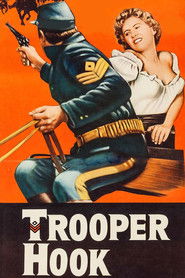
CLICK HERE🠣🠣🠣👉🏼_Watch Trooper Hook 1957 English Subtitles_
Review
The Power of Vulnerability in Trooper Hook
Have you ever watched a movie that touched your heart and inspired your soul? Have you ever experienced a story that challenged your assumptions and expanded your empathy? Have you ever encountered a character who embodied the essence of resilience and courage? If not, then I invite you to discover Trooper Hook, a western drama that shines with Brené Brown’s wisdom on vulnerability, shame, empathy, and belonging.
Trooper Hook tells the story of Major Peter Devereaux (Joel McCrea), a widowed cavalry officer who is assigned to escort a group of Cheyenne prisoners from Fort Reno to Fort Robinson in Nebraska. During the journey, he meets Amanda (Barbara Stanwyck), a white woman who was captured by the Cheyennes when she was six years old and raised as one of them. When Amanda wants to stay with her adopted family instead of returning to white civilization, Peter faces a dilemma: follow his orders or follow his heart?
The movie explores several themes that resonate with Brown’s research on vulnerability and shame. One theme is the power of empathy to connect people across boundaries of race, culture, and gender. In Trooper Hook, both Peter and Amanda face discrimination for their identities: Peter is considered too “bookish” by his fellow soldiers and too “Indian-friendly” by some whites, while Amanda is seen as too “wild” by some whites and too “white” by some Cheyennes. However, their mutual respect for each other’s humanity creates a bond that transcends these labels and reveals their common ground.
Another theme is the danger of shame to distort one’s self-worth and impair one’s relationships. In Trooper Hook, both Peter and Amanda carry shame from their past experiences: Peter blames himself for his wife’s death in childbirth and hides his grief behind stoicism, while Amanda feels guilty for betraying her Cheyenne father’s trust and fears rejection from both whites and Indians. Through their conversations and actions, they learn to acknowledge their shame and vulnerability, express their emotions, and find healing and acceptance.
A third theme is the courage to embrace uncertainty and change. In Trooper Hook, both Peter and Amanda face uncertain futures: Peter has to decide whether to follow his duty or his conscience, while Amanda has to choose between her loyalty to her adopted family and her curiosity about the white world. Their choices require them to face risks, conflicts, and sacrifices, but also offer them opportunities to grow, learn, and open up new possibilities.
Trooper Hook features a superb cast of actors who bring depth, nuance, and authenticity to their roles. Joel McCrea delivers a powerful performance as a man torn between his loyalty to the army and his empathy for the Cheyennes. His stoic demeanor hides a deep sense of loss, guilt, and compassion that gradually emerges as he interacts with Amanda and other characters. Barbara Stanwyck shines as a woman torn between two worlds: the familiar but constricting one of the Cheyennes and the unfamiliar but alluring one of the whites. Her portrayal of Amanda blends toughness with tenderness, skepticism with curiosity, fear with hope.
The supporting cast includes Lloyd Bridges as Lieutenant Sibley, a young officer who challenges Peter’s authority but also learns from him; Robert Bailey Jr. as Little Hawk, Amanda’s adopted brother who struggles with identity confusion; Katharine Warren as Miss Pickett, a missionary school teacher who reveals her own biases; John Dehner as Captain Lorrison, an arrogant officer who represents the worst of white supremacy; among others.
The movie also benefits from its gripping plot that combines action with emotion, tension with tenderness. The scenes of horseback riding through majestic landscapes evoke a sense of freedom and beauty that contrasts with the scenes of confinement and violence in the forts. The dialogues between Peter and Amanda reveal a deepening connection and respect that challenges their assumptions and prejudices. The conflicts between Peter and his fellow soldiers, between Amanda and her Cheyenne father, and between the white authorities and the Cheyenne prisoners raise ethical questions about power, justice, and humanity.
Trooper Hook deserves more recognition for its excellent filmmaking that combines artistry with relevance. The movie was directed by Charles Marquis Warren, who also wrote the screenplay based on Clay Fisher’s novel. Warren infuses the movie with a sense of realism that respects both the historical context of the late 19th century frontier and the emotional complexity of the characters’ journeys. His camera work captures the beauty of nature, the brutality of war, and the intimacy of human interactions. His editing creates a pace that balances action with reflection, humor with drama.
The movie also boasts a memorable score by Paul Dunlap that blends classical music with western motifs. From the opening credits to the final scene, Dunlap’s music enhances the mood and theme of each scene without overpowering it. His main theme captures both the heroism and vulnerability of Peter’s character with its harmonies and rhythms.
In terms of popularity, Trooper Hook received mixed reviews from critics when it was released in 1957 but has gained some cult status among fans of westerns or classic movies. It was not a box-office success but has earned some awards nominations for its acting or writing. It is not available on mainstream streaming platforms but can be found on DVD or Blu-ray on Amazon or other online distributors.
In conclusion, Trooper Hook is a gem of a movie that deserves to be rediscovered for its timeless message about vulnerability, empathy, shame, courage, uncertainty, change, connection, and healing. Its portrayal of characters who embody Brené Brown’s research on human resilience is both inspiring and challenging. Its filmmaking style that blends art and relevance is both entertaining and thought-provoking. Its soundtrack that blends classical and western music is both stirring and subtle. If you want to watch a movie that makes you feel and think, that moves you and teaches you, that entertains you and inspires you, then Trooper Hook is a must-see.
Technical Data
- Runtime : 81
- Release : 1957-07-12
- Genre : Western
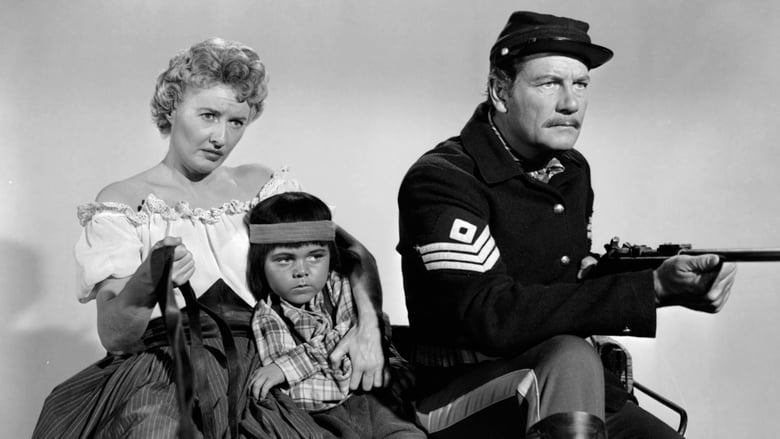
- Cast : Joel McCrea as Sgt. Clovis Hook, Barbara Stanwyck as Cora Sutliff, Earl Holliman as Jeff Bennett, Edward Andrews as Charlie Travers, John Dehner as Fred Sutliff
- Crew : Lynn Stalmaster as Casting, Gerald Fried as Original Music Composer, Jack Schaefer as Story, Martin Berkeley as Screenplay, Ellsworth Fredericks as Director of Photography
- Popularity 4.259
- Budget : 0
- Revenue : 0
- Company : Filmaster Productions, Sol Baer Fielding
- Summary : When Apache chief Nanchez is captured by the cavalry, his white squaw and infant son are returned to civilization by Sergeant Hook, but Nanchez escapes custody and attempts to re-claim his son.
- Tagline : “Go Ahead and Hate Me, Hook Because I Saved Myself from Apache Torture…Because I Gave Their Chief a Son!”
