“Lost Command 1966″ is a tense, action-packed war drama. It follows a French commander, Colonel Raspeguy, as he attempts to navigate political unrest and violence in Algeria during the Algerian War. With strong performances and visceral battle scenes, the film explores themes of loyalty, identity, and power politics amidst war-torn chaos.”
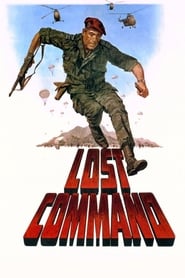
CLICK HERE🡇🡇🡇🎞️_Watch Lost Command 1966 English Subtitles_
Review
In the early years of the Algerian War, a French officer named Philippe Esclavier was sent to Algeria to train a group of Muslim soldiers to fight against their own people. This is the plot of “Lost Command”, a 1966 war drama film directed by Mark Robson and starring Anthony Quinn, Alain Delon, and Claudia Cardinale. The movie is based on Jean Lartéguy’s novel “The Centurions” and it explores themes such as loyalty, identity, and betrayal.
The movie opens with Esclavier (Quinn) recalling his experience in Indochina, where he had fought against communist guerrillas. He has now been tasked with creating a unit of local troops called “harks” (Harkis), who will help the French army fight against the FLN (Front de Libération Nationale), which seeks independence for Algeria. The harks are former rebels who have switched sides and pledged allegiance to France.
Esclavier’s mission is not an easy one. He faces resistance from his superiors who do not trust him or the harks, as well as from the harks themselves who feel torn between their loyalty to France and their loyalty to their own people. The harks are also targeted by the FLN, who view them as traitors and collaborators.
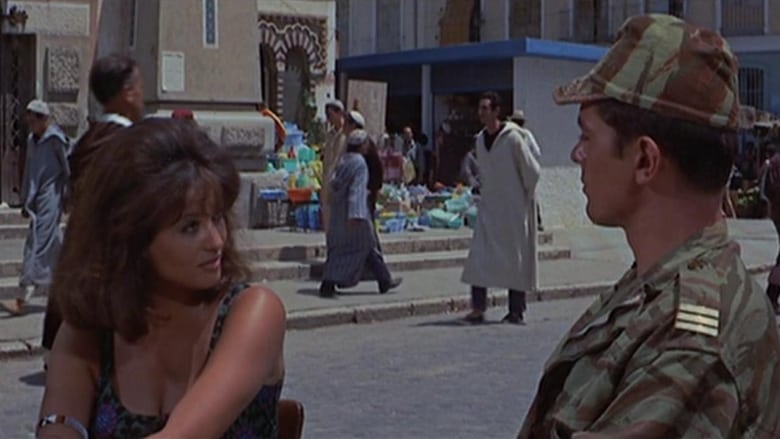
As Esclavier trains the harks, he becomes close to one of them named Lieutenant Mahidi (Delon), who proves to be a skilled fighter and leader. However, Mahidi’s loyalties are tested when he falls in love with Aicha (Cardinale), a beautiful Algerian woman who sympathizes with the FLN. Mahidi must choose between his duty to Esclavier and his love for Aicha.
The movie features several intense battle scenes that depict the brutality of war. The harks are often used as cannon fodder by the French army, and their lives are expendable in the eyes of their commanders. Esclavier, who initially sees the harks as tools to be used in his mission, gradually develops empathy for them and understands their plight.
The movie also touches on the political situation in France at the time. The Algerian War was a divisive issue that pitted supporters of French colonialism against those who advocated for Algerian independence. The characters in “Lost Command” represent different perspectives on the conflict, and the movie does not take sides but rather presents a complex picture of a turbulent period in history.
The cast of “Lost Command” is impressive. Anthony Quinn delivers a strong performance as Esclavier, portraying the character’s inner conflicts with depth and nuance. Alain Delon brings charisma to the role of Mahidi, while Claudia Cardinale adds glamour and vulnerability as Aicha. The supporting cast includes George Segal as Captain Boisfeuras, Esclavier’s rival, and Michèle Morgan as Countess De Clairefons, a society woman who takes an interest in Esclavier.
The movie’s score by Franz Waxman is notable for its use of Arabic music motifs, which give the film an exotic flavor. The cinematography by Robert Surtees captures the stark beauty of Algeria’s desert landscape and conveys a sense of claustrophobia during battle scenes.
Despite its merits, “Lost Command” received mixed reviews upon its release. Some critics praised it for its realism and complexity, while others criticized it for its length (it runs over two hours) and melodramatic elements. Today, however, it is considered a classic of its genre and a valuable historical document.
In conclusion, “Lost Command” is a gripping war drama that explores complex themes with intelligence and sensitivity. Its portrayal of the Algerian War remains relevant today as conflicts between Western powers and Muslim countries continue to ravage our world. The performances, cinematography, and score are excellent, and the movie deserves to be remembered as a landmark of its era. As Esclavier says in the film: “We fight for something we know is doomed. And yet we fight.”
Technical Data
- Runtime : 129
- Release : 1966-05-01
- Genre : Action, War
- Cast : Anthony Quinn as Lt. Col. Pierre Raspeguy, Alain Delon as Captain Phillipe Esclavier, George Segal as Lt. Mahidi, Michèle Morgan as Countess de Clairefons, Maurice Ronet as Capain. Boisfeuras
- Crew : Bruce Surtees as Camera Operator, Franz Waxman as Original Music Composer, John Stoll as Art Direction, Jonathan Benson as Second Assistant Director, Leonid Raab as Orchestrator
- Popularity 10.332
- Budget : 0
- Revenue : 0
- Company : Red Lion
- Summary : After being freed from a Vietnamese war prison, French Lt. Col. Pierre Raspeguy is sent to help quell resistance forces in Algeria. With the help of the Capt. Esclavier, who has grown weary of war, and Capt. Boisfeuras, who lives for it, Raspeguy attempts to convert a rugged band of soldiers into a formidable fighting unit, with the promise of marrying a beautiful countess if he’s made a general.
- Tagline : They lived and loved and fought across three continents !
