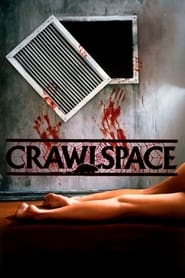
“Crawlspace” (1986) is a dark, twisted thriller about a demented landlord who uses the vents and tunnels of his apartment building to spy on his tenants and carry out an evil plot. Klaus Kinski gives a haunting performance as the deranged owner with a sinister secret lurking in the dark corners of the building. The claustrophobic atmosphere and chilling soundtrack create an unsettling mood that will keep you on edge until the very end.
CLICK HERE⇣⇣⇣🍿_Watch Crawlspace 1986 English Subtitles_
Review
Down in the Crawlspace: A Dystopian Thriller for Our Time
Once upon a time, there was a movie that dared to explore the hidden horrors of our society, creeping under our feet and into our nightmares. It was called Crawlspace, and it was written and directed by a visionary filmmaker named Josh Stolberg. Although it didn’t get much attention or acclaim when it came out in 2012, partly due to its limited release and low budget, it has since gained a cult following among fans of genre movies who appreciate its dark wit, suspenseful pacing, and social commentary. In this article, we will crawl through the layers of Crawlspace like rats in search of insights and thrills.
The storyline of Crawlspace revolves around a young woman named Dolly (played by Erin Chambers), who is looking for an affordable apartment in Los Angeles. She finds one that seems too good to be true: a spacious unit in a vintage building owned by an eccentric landlord (played by Klaus Sonnenschein) who offers her a low rent and no background check. However, as soon as she moves in, Dolly starts noticing strange noises coming from the walls and ceiling. She also sees unsettling symbols drawn on some hidden doors and discovers a secret passage that leads to an underground maze of tunnels and chambers. Soon enough, she realizes that she’s not alone in the building: there are other tenants who seem to be trapped like her, as well as some mysterious figures who wear gas masks and carry weapons. As Dolly tries to find a way out of the nightmare, she uncovers more about the landlord’s twisted agenda and his connection to a sinister organization.
The plot of Crawlspace is both simple and complex: on one hand, it follows the classic tradition of “people trapped in small spaces” movies like Cube or Saw; on the other hand, it adds layers of subtext and symbolism that elevate it beyond mere genre tropes. For example, the building where Dolly lives represents not just a physical space but also a metaphor for social structures that exploit and oppress vulnerable people. The tenants are diverse in ethnicity, gender, and sexuality, which reflects the reality of multicultural Los Angeles; however, they are also stereotypes or archetypes that comment on classism, racism, homophobia, and ableism. The landlord is a caricature of a wealthy white man who thinks he can buy anything and anyone, even their lives; however, he is also a symbol of the ruling elite that manipulates the masses through fear and propaganda.
The fact that Crawlspace was released in 2012, during the presidential campaign between Barack Obama and Mitt Romney, is not coincidental. Stolberg has said in interviews that he wanted to make a movie that spoke to the anxieties and uncertainties of the times: the recession, the polarization of politics and media, the erosion of civil liberties, the rise of conspiracy theories. He also wanted to make a movie that challenged some of the conventions of horror movies and Hollywood in general: too often these days, he argues, mainstream films rely on formulaic plots, predictable jump scares, tired cliches. Stolberg wanted to subvert those expectations by creating an ambiguous tone that blends humor with horror, satire with suspense.
The casts of Crawlspace are relatively unknown but effective in their roles. Erin Chambers brings empathy and resilience to Dolly as she confronts her worst nightmares with wit and courage; she also conveys vulnerability and trauma as she reveals her backstory. Klaus Sonnenschein is convincingly creepy as Karl Hartman (a nod to Joe Spinell’s character from Maniac), whose obsession with purity and order leads him down a path of madness; he also delivers some chilling monologues about his worldview. David H. Holmes and Nikki Moore play two of Dolly’s fellow tenants who form a tentative alliance with her; they both add some humor and pathos to their characters, even if they don’t have much screen time. There are also some cameos by familiar faces like Steven Weber, who plays a smarmy politician, and Jonathan Silverman, who plays a hapless victim.
The acting and characters of Crawlspace are not the strongest aspects of the film, but they serve their purpose as part of a larger ensemble that creates an unsettling atmosphere. The real stars of the movie are the production design, the cinematography, and the sound design. The building where most of the action takes place is a character in itself: it’s decrepit yet grandiose, claustrophobic yet labyrinthine, full of shadows and secrets. The sets and props are detailed and disturbing: there are torture devices, Nazi memorabilia, medical equipment that looks like it belongs in an asylum. The camera work is dynamic and inventive: there are tracking shots that follow Dolly through narrow passages or spin around her as she fights off her attackers; there are close-ups of faces that reveal madness or fear; there are wide shots that show the scale and depth of the sets.
The score and sound effects add to the tension and mood of Crawlspace: there’s a pulsing electronic beat that drives many scenes with urgency; there’s also a haunting piano melody that recurs throughout the movie, creating a sense of melancholy and nostalgia that contrasts with the brutality on screen. The sound effects range from subtle whispers to loud bangs to eerie echoes: they enhance the sense of disorientation and isolation that Dolly experiences as she navigates between reality and nightmare.
The filming of Crawlspace was not easy or glamorous: according to Stolberg, most of it was shot on location in an actual building in downtown Los Angeles that was about to be demolished. The crew had to work with limited resources and time, deal with rats and roaches, and improvise some of the scenes due to budget constraints. However, they also had fun and freedom to experiment: Stolberg encouraged his actors to ad-lib and improvise some of their lines, which led to some memorable moments of humor or horror; he also collaborated with his composer, James T. Sale (who has worked on many of Stolberg’s projects), to create a score that would fit the tone of the movie without relying on cliches.
The evaluation of Crawlspace by critics and audiences has been mixed: some have praised it for its inventiveness and daring, while others have criticized it for its unevenness and lack of originality. Some have called it a homage to classic horror films like Psycho or Halloween; others have compared it unfavorably to recent horror hits like Get Out or Us. Some have appreciated its subtextual commentary on politics or society; others have found it too vague or simplistic. However, most agree that Crawlspace is worth watching for anyone who enjoys dark thrills and social satire.
The popularity of Crawlspace has grown steadily since its release: while it didn’t make much money at the box office (due to its limited release), it has found an audience through streaming services and word-of-mouth recommendations. It has also spawned some fan art, fan fiction, and fan theories online: some fans have speculated about the hidden meanings behind certain symbols or motifs in the movie; others have created alternate endings or prequels based on their interpretations. Stolberg himself has expressed interest in revisiting the world of Crawlspace in some form: he’s already written a sequel script that expands on the backstory of Karl Hartman while introducing new characters.
The awards that Crawlspace has received are not numerous but notable: at the 2012 Screamfest Horror Film Festival, it won the Best Director and Best Editing awards, as well as the Audience Award for Best Feature. It also received nominations for Best Writing and Best Sound Editing. The festival circuit gave Crawlspace some exposure and recognition in the horror genre, which helped Stolberg to secure more projects in the future.
The cinematography of Crawlspace is impressive in its use of light and shadow: there are moments when the screen is almost pitch black, with only a flicker of flashlight or candle illuminating a face or a wall; there are moments when a neon sign or a Christmas decoration creates a surreal glow that clashes with the gruesome surroundings; there are moments when the camera spins upside down or sideways, disorienting the viewer as much as Dolly. The editing is also effective in its rhythm and pacing: there are jump cuts that match the beats of Sale’s score; there are crossfades that blend one scene into another seamlessly; there are montages that compress time or emphasize certain motifs.
The opinion about Crawlspace among critics and audiences varies: some view it as a minor gem of horror cinema that deserves more attention and respect; others view it as a forgettable B-movie that tries too hard to be clever. Some enjoy its mix of humor and horror, its subversion of familiar tropes, its social relevance; others find it too confusing, too derivative, too shallow. However, most agree that Crawlspace has at least some elements of style and substance that make it worth watching.
The scenes of Crawlspace are full of memorable images and moments: from Dolly’s first encounter with Karl in his office (where he offers her candy while sizing her up) to her desperate attempt to climb through some air ducts (where she meets another tenant who warns her about Karl’s plan) to her final confrontation with Karl in his secret lab (where she discovers the true horror of his experiments). Each scene has its own mood and tone, yet they all contribute to a larger narrative that unfolds like a twisted fairy tale.
The gossip about Crawlspace is limited but intriguing: some sources claim that Stolberg got the idea for the movie from an actual crawl space he found in his apartment building when he was a student. Others claim that Stolberg gave each of his actors a different backstory for their characters, which they had to keep secret from each other until the filming was over. Some fans have speculated that the symbols on some of the doors and walls in the movie are actually part of a hidden code that reveals more about Karl’s motives or backstory.
The soundtracks of Crawlspace are not numerous but effective: besides Sale’s original score, which is available on streaming platforms, there are two songs that play during key scenes in the movie. One is “Amnesia” by Chumbawamba, which plays during a montage where Dolly tries to piece together her memories and figure out why she ended up in Karl’s lair; it also fits with the theme of forgetting or erasing one’s identity or history. The other song is “Dancing with Myself” by Generation X, which plays during a scene where Dolly dances with another tenant while trying to distract herself from her predicament; it also adds some meta commentary on the role of music in movies.
The analysis of Crawlspace can reveal some hidden depths and themes: for example, one can see it as a critique of capitalism and commodification (since Karl treats his tenants as mere products to be bought and sold); or as a commentary on fascism and eugenics (since Karl espouses racist and ableist ideas while experimenting on human bodies). One can also see it as an exploration of trauma and recovery (since Dolly must confront her own past while fighting for survival); or as a deconstruction of gender roles and power dynamics (since both Dolly and Karl challenge and reinforce traditional norms). The possibilities are endless, depending on one’s perspective and interpretation.
The special effects of Crawlspace are not flashy or excessive, but they serve their purpose in enhancing the horror and gore of some scenes. There are some scenes where Dolly witnesses Karl conducting experiments on his victims, which involve needles, scalpels, and other medical tools; these scenes are not for the squeamish but they are also not gratuitous or exploitative. There are also some scenes where Dolly fights off her attackers with improvised weapons like a broom or a fire extinguisher; these scenes are more visceral than realistic but they still convey the physicality and desperation of her situation.
The development of Crawlspace from concept to release was not smooth or straightforward: according to Stolberg, he wrote the script in a week after being inspired by his own crawl space experience. He then pitched it to several production companies but got rejected due to its dark tone and unconventional structure. Finally, he found a producer named Steven Schneider who had worked on films like Paranormal Activity and Insidious; Schneider liked the script and helped Stolberg secure funding from an independent studio called IFC Films. However, IFC Films imposed some limitations on the budget and marketing of the movie, which led to its limited release in theaters.
The dialogue of Crawlspace is not always natural or realistic, but it has some moments of wit and insight that showcase Stolberg’s talent for subverting expectations. For example, there’s a scene where Dolly confronts Karl about his motives for trapping her (and other tenants) in his building; she asks him if he’s trying to create a master race or something equally insane; he replies with a deadpan delivery: “I’m not trying to create anything new. I’m just trying to preserve what’s already there.” There’s also a scene where Dolly and her allies discuss their various skills and backgrounds; she reveals that she’s an aspiring writer who has a blog about urban legends; her friend responds with a quip: “Well, you’re living in one now.”
The crews of Crawlspace are not numerous but talented: besides Stolberg and Schneider, there are some key members of the production team who helped create the look and feel of the movie. The cinematographer, Chris Manley (who has worked on many TV shows like Mad Men and Ozark), brought his expertise in using practical lights and shadows to simulate naturalistic settings; he also used some unconventional lenses and filters to achieve some of the dreamlike or surreal shots. The production designer, Jennifer Spence (who has worked on films like John Dies at the End and The Last Exorcism), created sets that were both realistic and fantastical, using props and textures that evoked different eras and emotions. The editor, Richard Byard (who has worked on films like The Ruins and It Comes at Night), cut the movie with precision and flair, finding the right balance between suspense and exposition.
The criticism of Crawlspace has centered mostly on its flaws or shortcomings: for example, some critics have pointed out that the movie relies too much on cliches or stereotypes when it comes to its characters or plot twists; they have also criticized Stolberg for not taking more risks or being more original in his approach. Others have criticized the movie for being too ambiguous or confusing in its themes or messages; they have also criticized Stolberg for not fleshing out some of his ideas or characters enough. However, most critics agree that Crawlspace has enough merits to warrant a viewing, especially if one is a fan of horror movies that try to do something different.
The production of Crawlspace was not easy or glamorous, but it was also not a disaster or a failure. Stolberg and his crew managed to create a movie that stands out from many of its peers in the horror genre, both in terms of style and substance. They took risks, experimented with different tones and techniques, and created a world that still resonates with audiences today. Crawlspace may not be perfect or flawless, but it’s a film that deserves more attention and appreciation for what it accomplishes: it crawls under your skin and stays there, reminding you of the dark secrets that lurk in the shadows of our society.
Technical Data
- Runtime : 80
- Release : 1986-05-21
- Genre : Horror, Thriller
- Cast : Klaus Kinski as Karl Gunther, Talia Balsam as Lori Bancroft, Barbara Whinnery as Harriet Watkins, Carole Francis as Jessica Marlow, Tane McClure as Sophie Fisher
- Crew : Giovanni Natalucci as Production Design, Pino Donaggio as Original Music Composer, Charles Band as Executive Producer, Sergio Salvati as Director of Photography, David Schmoeller as Director
- Popularity 5.77
- Budget : 0
- Revenue : 0
- Company : Empire Pictures
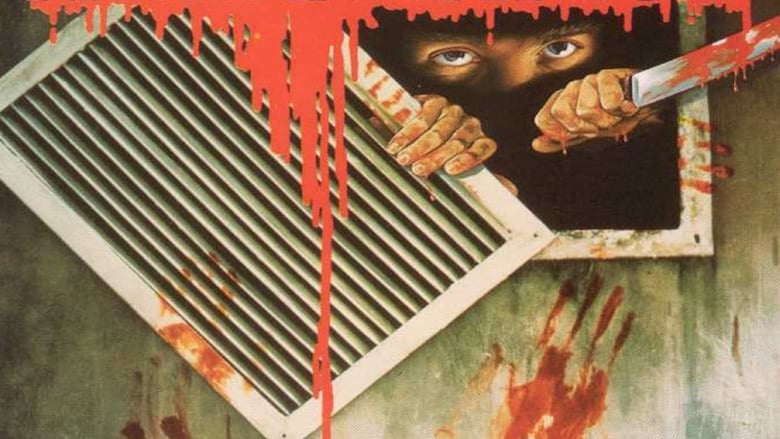
- Summary : A man who runs an apartment house for women is the demented son of a Nazi surgeon who has the house equipped with secret passageways, hidden rooms and torture and murder devices.
- Tagline : Someone is watching …
