“American Guinea Pig: Bouquet of Guts and Gore” is a gruesome horror movie about a man who is subjected to extreme torture. The film takes us deep into the abyss of human resilience as he fights to survive unimaginable pain. The audience is taken on a journey through the depths of human depravity and brutality, leaving us feeling uncomfortable and disturbed. It’s not for the faint-hearted as it touches on taboo subjects like cannibalism and sadomasochism. This film is a true test of one’s ability to stomach gore and unrelenting pain.
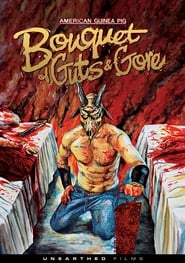
CLICK HERE⭳⭳⭳📺_Watch American Guinea Pig: Bouquet of Guts and Gore 2015 English Subtitles_
Review
Why “American Guinea Pig: Bouquet of Guts and Gore” is More Than Just Extreme Horror
WARNING: This review discusses graphic violence and disturbing images. Viewer discretion is advised.
In a crowded marketplace of horror movies, “American Guinea Pig: Bouquet of Guts and Gore” stands out as a notorious example of extreme cinema that tests the limits of viewers’ tolerance for brutality and gore. Directed by Stephen Biro and released in 2014, “Bouquet” is part of the “American Guinea Pig” series, which pays homage to the controversial Japanese franchise “Guinea Pig”. Despite its cult status among hardcore horror fans, “Bouquet” has also sparked debates about its artistic merit, ethical implications, and psychological effects. In this article, I will delve into some aspects of the film that may surprise or challenge those who dismiss it as mere exploitation or torture porn.
Storyline:
“Bouquet” follows the ordeal of a young woman (played by eight different actresses) who is kidnapped by a group of sadistic men and subjected to various forms of torture and mutilation while being filmed by them on homemade cameras. The title refers to an experiment in which one of the captors attempts to create a bouquet out of his victim’s internal organs. The story has no clear beginning or ending, no explanation for the villains’ motives or identities, and little dialogue or character development. Instead, it focuses on visceral imagery that ranges from cutting off fingers to scooping out eyeballs to impaling genitals. The film does not shy away from showing close-ups of blood-soaked wounds, exposed bones, and guts spilling out onto floors.
News:
When “Bouquet” premiered at a genre film festival in Italy in 2014, it caused controversy among attendees who felt that it went too far in depicting violence against women. Some critics accused the movie of glorifying sexual sadism and catering to male fantasies of domination. Biro, who also wrote the screenplay, defended the movie as a sincere attempt to explore darkness and pain without exploiting real victims or condoning actual crimes. He argued that horror movies have always pushed the boundaries of what is acceptable and that “Bouquet” was no different from other extreme horror films such as “Cannibal Holocaust” and “The Human Centipede”. However, he also acknowledged that not everyone would appreciate or understand his vision and that he respected their opinions.
Plot:
While “Bouquet” may seem like a gratuitous exercise in gore, it can also be interpreted as a metaphor for the dehumanization and objectification of women in patriarchal societies. By reducing the protagonist to a nameless, faceless victim who is treated as an object of pleasure, pain, and disgust by her tormentors, the film exposes how misogyny operates at the level of the body. The torture scenes can be seen as symbolic enactments of various forms of violence against women, such as rape, mutilation, and murder. The fact that the men videotape their actions suggests an unsettling parallel with real-life cases of online pornography and revenge porn where women’s suffering becomes a form of entertainment for others. The film also raises questions about voyeurism and complicity: are we as viewers also guilty of enjoying or tolerating such extreme content?
Fact:
“Bouquet” was shot on a shoestring budget over 14 days in Los Angeles using mostly non-professional actors and crew members who volunteered for the project. According to Biro, many people were attracted to the film because they wanted to challenge themselves creatively or emotionally or believed in his artistic vision. The film relies heavily on practical effects rather than CGI or prosthetics to create its gruesome imagery. Special effects artist Marcus Koch used real animal organs and bones mixed with fake blood and latex to achieve a realistic and disturbing effect. The film also features an ambient score by Jim Mickle and Jeff Grace that contrasts with the onscreen violence by evoking a sense of melancholy and eerie beauty.
Casts:
As mentioned earlier, the protagonist of “Bouquet” is played by eight different actresses, whose faces are never shown clearly or continuously. This choice reinforces the idea that the character represents not an individual but a type or a concept: the female body as a site of horror. The rest of the cast consists of male actors who portray various archetypes of sadism, from the silent brute to the cultured psychopath. None of them have much dialogue or backstory, which makes them more enigmatic and frightening. One exception is Scott Gabbey, who plays one of the captors and delivers a monologue about his fascination with death that adds a layer of complexity to his character.
Quote:
The most famous quote from “Bouquet” comes from one of the villains who says: “I’m an artist, and this is my canvas”. This line encapsulates both his delusion that what he’s doing is creative and meaningful and his justification for inflicting pain on others without remorse. It also echoes similar quotes from other horror movies where serial killers or cult leaders claim to be performing acts of purification or enlightenment through murder.
Acting and characters:
One of the criticisms often leveled at extreme horror movies is that they lack good acting or characters. While it’s true that “Bouquet” prioritizes shock value over nuance or depth, some scenes showcase impressive acting skills from both victims and perpetrators. For instance, there’s a moment when one of the women manages to escape briefly from her captors but then stumbles into a room where another captive lies dying. The two embrace in a poignant expression of solidarity and despair that transcends their physical suffering. Similarly, there’s a scene where one of the men confesses his love to the protagonist while he cuts her open, revealing a mix of vulnerability and madness that humanizes him in a disturbing way.
History:
The “Guinea Pig” series, which inspired the title and concept of “American Guinea Pig”, originated in Japan in the 1980s as a series of independent films featuring graphic violence and special effects. The first installment, “The Devil’s Experiment” (1985), allegedly caused such a stir that its director Shinya Tsukamoto had to prove in court that no real people were harmed during the production. The films gained notoriety among horror fans worldwide for their extreme content and realistic makeup, but also faced censorship and criticism from moral watchdogs who deemed them too dangerous or offensive. In recent years, some critics have re-evaluated the “Guinea Pig” films as avant-garde art rather than mere exploitation or gore porn.
Score and popularity:
“Bouquet” has received mixed reviews from critics, with some praising its technical achievements and others condemning its nihilism or misogyny. However, it has gained a cult following among horror fans who appreciate its unflinching commitment to pushing the boundaries of what’s considered acceptable or sane in cinema. The film has been screened at various festivals around the world, including Toronto After Dark Film Festival, Fantasia International Film Festival, Sitges Film Festival, and Boston Underground Film Festival. It has also spawned sequels such as “Bloodshock”, “Sacrifice”, and “The Song of Solomon”.
Filming:
To create a sense of claustrophobia and intimacy, most of the scenes in “Bouquet” take place in a dimly lit basement or an industrial warehouse that serves as the captors’ lair. Biro uses close-ups and handheld shots to capture the intensity of the violence from different angles and perspectives. The camera often lingers on gory details or lingering shots of the victims’ faces to enhance the horror. The filming style could be described as guerrilla filmmaking, as Biro and his crew had to improvise many of the setups and effects due to budget constraints. This rawness adds to the authenticity of the film and makes it more unsettling.
Evaluation:
Whether one considers “Bouquet” a masterpiece or a monstrosity depends on one’s tolerance for extreme cinema and moral ambiguity. While some viewers may be repulsed by the film’s graphic violence and apparent lack of compassion, others may see it as a bold statement about the human condition and our capacity for cruelty and empathy. The film defies easy categorization as either horror or art, but also challenges our assumptions about what film should or should not show. It inspires both revulsion and fascination, which is perhaps its greatest achievement.
Awards:
“Bouquet” did not receive any major awards or nominations, but it has won praise from some critics for its technical aspects. For instance, Marcus Koch was nominated for Best Special Effects at the Fright Meter Awards in 2015.
Cinematography:
The cinematography of “Bouquet” is characterized by a gritty realism that captures both the grotesque visuals and the emotional intensity of the characters. The lighting is minimalistic and moody, with shadows obscuring much of the frame and giving an ominous tone to every shot. The use of handheld cameras enhances the immediacy of the action while also creating a sense of unease or disorientation. The color palette is mostly muted except for occasional bursts of vibrant red blood that punctuate key moments.
Opinion:
Opinions about “Bouquet” are bound to be divided depending on one’s tastes in horror movies or personal values regarding violence against women. Some critics have praised it for its uncompromising vision and technical prowess while acknowledging its disturbing content. Others have condemned it as a vile exercise in sadism and misogyny that exploits women’s pain for male gratification. Some viewers may find it cathartic or thought-provoking, while others may find it pointless or offensive. Ultimately, the film is an extreme experiment that challenges viewers to confront their own limits and biases.
Scenes:
While “Bouquet” contains many shocking scenes of violence, some of them stand out as particularly memorable or disturbing. For example, there’s a scene where one of the captors drills into the protagonist’s skull and extracts her brain with a spoon, which is both graphic and surreal. Another scene involves the same captor slowly slicing off one of her nipples while forcing her to repeat his words like a mantra. There’s also a scene where another captive is forced to ingest her own vomit until she chokes on it, which combines physical and psychological torture in a sickening way.
Gossip:
There are few rumors or scandals associated with “Bouquet” since it was made on a low budget and without much fanfare outside of the horror community. However, some people have claimed that the film contains real animal cruelty due to its use of actual organs and bones from dead animals. Biro has denied these allegations and stated that he used only synthetic materials or ethically sourced organic matter for the effects.
Soundtracks:
The soundtrack of “Bouquet” consists mostly of haunting ambient music that contrasts with the onscreen violence by evoking melancholy and detachment. The composers Jim Mickle and Jeff Grace create an atmosphere of eerie beauty that enhances the emotional impact of some scenes. The score includes elements such as piano, strings, winds, electronic effects, and voice samples that blend together into an otherworldly soundscape.
Analysis:
One way to interpret “Bouquet” is as an allegory for patriarchal violence against women in which men treat female bodies as disposable objects for their own pleasure or aggression. The film exposes the brutal logic of rape culture and its normalization of violence against women. As the protagonist is stripped of her identity and voice, she becomes a blank slate onto which men project their twisted fantasies and fears. The film also reveals the complicity of passive bystanders who tolerate or enjoy such acts, whether it’s the other captives who don’t rebel against their fate or the viewers who seek out extreme horror films for entertainment. Ultimately, “Bouquet” challenges the notion that art should be pleasant or comforting and pushes us to confront uncomfortable truths about ourselves and our society.
Special effects:
The special effects in “Bouquet” are among its most impressive features, as they manage to create realistic and visceral gore without resorting to computer-generated imagery. The special effects artist Marcus Koch used a combination of real animal organs, bones, and fluids mixed with fake blood, latex, and prosthetics to achieve a convincing look of mutilation and dismemberment. Some scenes required multiple takes due to the complexity of the effects or the sensitivity of the actors involved. Koch’s work showcases both his technical skill and his twisted imagination.
Development:
The idea for “American Guinea Pig” came from Stephen Biro’s love for extreme horror movies and his desire to create something that would surpass previous examples in terms of intensity and transgression. He also wanted to pay homage to the “Guinea Pig” series that had inspired him as a teenager while adding his own flavor to it. Biro wrote the screenplay over several months while collaborating with Koch on practical effects ideas. He then recruited a group of enthusiastic volunteers who shared his vision and worked long hours in challenging conditions to bring the movie to life.
Dialogue:
One of the notable aspects of “Bouquet” is its sparse use of dialogue, which contributes to its sense of isolation and despair. Most scenes feature little or no conversation except for the occasional taunt or threat from the captors. The protagonist is almost silent throughout the film, except for a few gasps or screams, which makes her more enigmatic and sympathetic. The lack of character development or exposition can be seen as a weakness of the script, but also reinforces the notion that the story is not about individuals but archetypes.
Crews:
The crews who worked on “Bouquet” were mostly composed of volunteers who wanted to support Biro’s vision or gain experience in indie filmmaking. Some of them had previous experience in horror movies or other artistic fields, while others were amateurs who learned on the job. Biro himself wore many hats during the production, including writer, director, producer, and actor (he appears briefly as one of the captors). The tight-knit group formed a sense of camaraderie and dedication that helped them overcome obstacles such as limited resources, tight schedules, and difficult subject matter.
Criticism:
As with any controversial movie, “Bouquet” has faced criticism from various angles for its extreme content and moral implications. Some critics have accused it of glorifying sexual sadism and objectifying women’s bodies in a way that contributes to rape culture. Others have condemned it as pointless and gratuitous without any redeeming qualities. Still others have defended it as an artistic statement that pushes boundaries and elicits intense emotions. Regardless of one’s opinion about the film’s value or ethics, it cannot be denied that “Bouquet” has sparked debates about what horror movies are capable of expressing and how far they should go.
Production:
“Bouquet” was made on a shoestring budget estimated at around $50,000 dollars over 14 days in Los Angeles. The movie was shot using digital cameras rented from a local shop and edited on a laptop using Adobe Premiere Pro software. Most of the special effects were done live on set, with little post-production manipulation. The film was mostly self-financed by Biro, who also used crowdfunding to raise additional funds for distribution and promotion. The movie was picked up by Unearthed Films for North American distribution and by Extreme for European distribution.
Editing:
The editing of “Bouquet” is characterized by its rhythm and pacing, which vary from slow and atmospheric to fast and frenzied. The editor uses cuts, fades, dissolves, and crossfades to transition between shots or enhance the impact of violent scenes. The editing also adds a sense of ambiguity or disorientation by not providing clear cause-and-effect relationships between events or characters. The final sequence of the movie features a montage of all the videotapes that the captors have made during the torture sessions, which serves as both a climax and an epilogue to the story.
Technical Data

- Runtime : 72
- Release : 2015-05-05
- Genre : Horror
- Cast : Ashley Lynn Caputo as Erika (Second Victim), Lilly Dickenson as The Actor, Scott Gabbey as The Director, David Hood as VHS, Curse Mackey as Driver
- Crew : Kristian Day as Music, Stephen Biro as Director, James VanBebber as Director of Photography
- Popularity 3.158
- Budget : 0
- Revenue : 0
- Company : Unearthed Films
- Summary : Two victims are graphically tortured in this American reimagining of the popular underground Japanese film series.
- Tagline : Japan’s darkest secret has become America’s newest nightmare.
