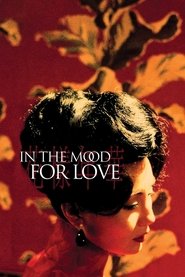
In the Mood for Love is a visually stunning film about a forbidden love affair in 1960s Hong Kong. The cinematography is exquisite, with rich colors and moody lighting that perfectly capture the atmosphere of the era. The characters are complex and enigmatic, with their emotions simmering just beneath the surface. The film explores themes of love, desire, and betrayal in a subtle and nuanced way, leaving much to interpretation. It’s a beautiful and haunting portrait of two people who find solace in each other’s company but are ultimately unable to be together.
CLICK HERE⭭⭭⭭🎞️_Watch In the Mood for Love 2000 English Subtitles_
Review
In the Mood for Love: A Masterpiece in Slow-Burn Romance
When it comes to love stories, few films can match the beauty and elegance of Wong Kar-wai’s “In the Mood for Love.” Released in 2000, this Hong Kong film is widely regarded as one of the greatest romantic dramas ever made. Its slow-burning storyline, stunning cinematography, and hauntingly melancholy score have earned it a loyal following among movie lovers around the world.
The plot of “In the Mood for Love” is deceptively simple. It follows two neighbors, Mrs. Chan (Maggie Cheung) and Mr. Chow (Tony Leung), who gradually discover that their respective spouses are having an affair with each other. As they spend more time together trying to come to terms with their betrayal, they develop a close bond that teeters on the edge of romantic love, but never quite crosses that line.
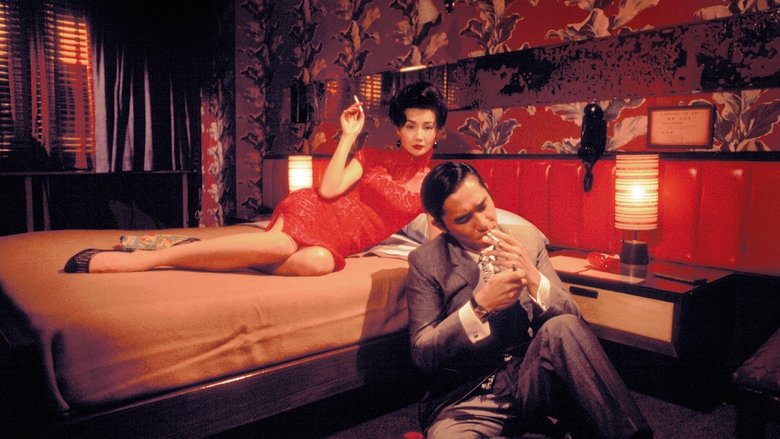
One of the most striking aspects of “In the Mood for Love” is its visual style. Wong Kar-wai and his cinematographer Christopher Doyle create a sumptuous world of vivid colors and intricate compositions that capture both the beauty and loneliness of urban life in 1960s Hong Kong. Every shot feels carefully crafted and ripe with symbolism – from Mrs. Chan’s vibrant cheongsams to Mr. Chow’s shabby apartment building.
The film’s score, composed by Shigeru Umebayashi and Michael Galasso, is equally affecting. Its lush strings and haunting melodies perfectly capture the longing and melancholy at the heart of Mrs. Chan and Mr. Chow’s relationship – a love story that can never truly be realized.
Of course, none of this would work without two masterful performances from Maggie Cheung and Tony Leung as Mrs. Chan and Mr. Chow respectively. Their chemistry is palpable even when they’re simply standing next to each other in silence; every gesture, every glance speaks volumes. It’s a testament to their talent that they can convey so much emotion through restrained, understated performances.
Despite its critical acclaim and devoted fanbase, “In the Mood for Love” was something of a box office disappointment upon its release in 2000. Nevertheless, it went on to win numerous awards and accolades, including Best Director at the Cannes Film Festival and a BAFTA for Best Film not in the English Language.
Part of what makes “In the Mood for Love” so enduringly popular is its ability to resonate with audiences across cultures and time. At its core, it’s a story about unfulfilled desire and the emotional costs of repression – themes that are universal and timeless.
One key element of the film’s production that often goes overlooked is its use of physical space. Wong Kar-wai frequently places his characters in tight, confined spaces – whether it’s Mr. Chow’s cramped apartment or a narrow alleyway. This creates a sense of claustrophobia and suffocation that mirrors their emotional state: trapped in a loveless marriage, yearning for something more.
Another notable feature of “In the Mood for Love” is its use of repetition. Throughout the film, we see Mrs. Chan and Mr. Chow returning again and again to certain locations – such as a noodle stand or a stairway – as if trying to recapture something that they’ve lost. This reinforces the film’s themes of nostalgia and longing, as well as creating a sense of circularity that underscores their inability to break free from their circumstances.
It’s worth noting that “In the Mood for Love” wasn’t Wong Kar-wai’s first attempt at telling this story; he originally intended it as a sequel to his 1990 film “Days of Being Wild.” However, as he worked on the script he realized that it had taken on a life of its own, and decided to make it a standalone film. This explains some of the subtle callbacks and references to “Days of Being Wild” that can be seen throughout “In the Mood for Love.”
One particularly memorable scene in the film involves Mrs. Chan and Mr. Chow rehearsing a conversation that they imagine having with their unfaithful spouses. They repeat their lines over and over again, trying to perfect the tone and inflection until it becomes almost like a ritual. It’s a powerful metaphor for the way we often try to control our own emotions by scripting our interactions with others.
Despite its many strengths, “In the Mood for Love” has not been immune to criticism. Some have argued that its deliberately slow pace and lack of conventional plot development make it too self-indulgent or pretentious. However, these criticisms miss the point; the film is intentionally meditative, inviting us to linger on small details and subtle gestures in order to fully appreciate their significance.
Ultimately, what makes “In the Mood for Love” so special is its ability to capture something ineffable about human connection. It’s a story about two people who find solace in each other’s company even as they’re grappling with deep emotional pain. Their love may never be consummated, but it’s no less powerful for that fact – perhaps even more so.
As Mr. Chow says near the end of the film: “It is a restless moment. She has kept her head lowered…to give him a chance to come closer. But he could not, for lack of courage…She turns away and…disappears into the crowd.” It’s a bittersweet ending that perfectly encapsulates everything that makes “In the Mood for Love” such an indelible work of art: its sensitivity, its beauty, and its profound insight into what it means to be human in an imperfect world.
Technical Data
- Runtime : 99
- Release : 2000-09-29
- Genre : Drama, Romance
- Cast : Maggie Cheung as Su Li-Zhen, Tony Leung Chiu-wai as Chow Mo-Wan, Rebecca Pan as Mrs. Suen, Kelly Lai Chen as Mr. Ho, Siu Ping-lam as Ah Ping
- Crew : Christopher Doyle as Director of Photography, Wong Kar-wai as Screenplay, Wong Kar-wai as Director, Wong Kar-wai as Producer, Michael Galasso as Music
- Popularity 28.453
- Budget : $150,000
- Revenue : $14,204,632
- Company : Block 2 Pictures, Orly Films, Jet Tone Films
- Summary : Two neighbors become intimate after discovering that their spouses are having an affair with one another.
- Tagline : Feel the heat, keep the feeling burning, let the sensation explode.
